Air leakage is the volume of air that passes through a closed window per unit of time, at a stated pressure difference. The pressure has to be stated because the flow does not scale linearly with it, and the specimen has to be stated because the number belongs to that size.
How air leakage through a window is measured and reported
rev Cissue 04rev Crots yes — the figures above move with the standarddrawn by The Transom Set (a named set, not a person)
How the test is run
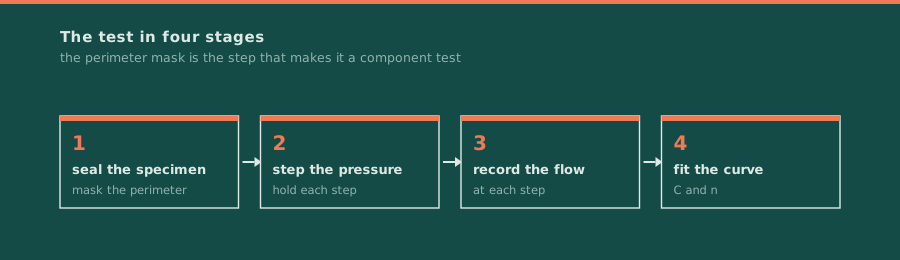
The specimen is sealed into a chamber with its perimeter masked, so the measurement is of the window and not of the installation. Pressure is applied in steps and the flow needed to hold each step is recorded. The result is a curve, and the reference figure is read off that curve at the stated pressure.
- Seal the specimen into the chamber and mask the perimeter so the frame joint is not measured.
- Apply pressure in steps across the range the method specifies, and hold each step until it settles.
- Record the flow at each step, then fit the flow coefficient and the exponent to the points.
- Report the reference figure at the stated pressure, with the specimen size and the standard.
The conversion trap
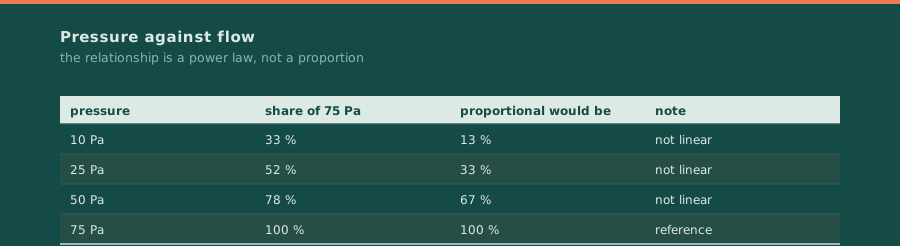
Because the relationship is a power law rather than a straight line, a figure quoted at one pressure cannot be scaled to another by simple proportion. A window leaking 20 m³/h at 75 Pa does not leak 2.7 m³/h at 10 Pa; the correct figure is nearer 6.5. Reports that divide by the pressure ratio are wrong, and they are common.
| Pressure | Share of the 75 Pa figure | Note |
|---|---|---|
| 10 Pa | about 33 % | not 13 % |
| 25 Pa | about 52 % | not 33 % |
| 50 Pa | about 78 % | not 67 % |
| 75 Pa | 100 % | reference for most programmes |
Air leakage at the window is not the same as airtightness of the building. The window test measures one component in a chamber; a building airtightness test measures the whole envelope including every junction, and the window is a small part of it.
Where this sheet stops
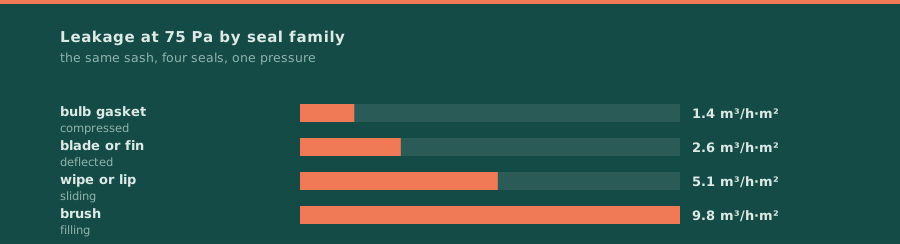
This page covers the measurement and its reporting. The seal that decides the result is owned by the weatherstrip page, the line behind the frame by the airtightness page, and the whole-building figure by that page's own test.
Documents this sheet is drawn from
- 1ASTM E283 Standard Test Method for Determining Rate of Air Leakage Through Exterior Windows, Curtain Walls, and Doors (ASTM Store)supports the air leakage test method and the reference pressure used here
- 2Investigation of the Impact of Commercial Building Envelope Airtightness on HVAC Energy Use (NIST)supports the relationship between envelope airtightness and energy use
- 3Investigation of the Impact of Commercial Building Envelope Airtightness on HVAC Energy Use (NIST PDF)supports the same investigation in its published report form, used for the figures quoted
Each line points at one specific document, with its own title as the link text. No line is a home page and no line is a search result.
Sign the sheet and stop Sign the sheet and stop once you have the reference pressure, the exponent and the specimen size. Those three make the number usable.