A certificate is a claim that a specific specimen passed a specific test under a specific method on a specific date. It is evidence about that specimen, and it becomes misleading the moment any one of the four fields is carried across to something else.
How to read a glazing certificate without being misled
rev Bissue 04rev Bdrawn by The Transom Set (a named set, not a person)
The four fields
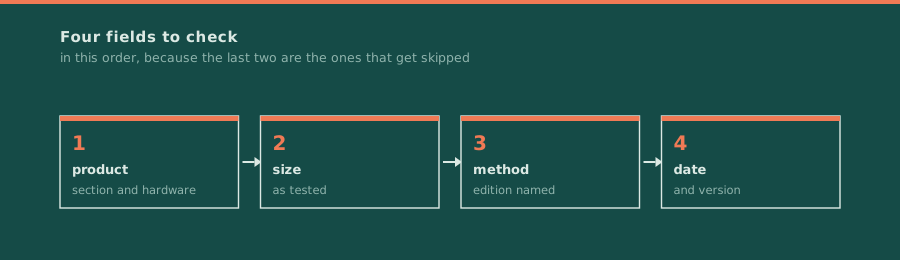
Product identity is the least ambiguous and the most often fudged, because a family name can cover several depths and several hardware options. Specimen size is the one people skip. Method and date matter because a rating under a superseded edition is not automatically valid under the current one.
- Read the product identity and check it matches the section, depth and hardware being specified.
- Read the specimen size and compare it with the size on the drawing, not the size in the brochure.
- Read the method and the edition, and check whether that edition is the one the project is being built to.
- Read the date, then check whether the product has changed since — a certificate describes a version.
Where certificates mislead
Not usually by lying. By being read as a property of a product family rather than of a specimen. A U-value measured on a 1.5 m² window is a valid measurement; applied to a 4 m² window it is an extrapolation, and the extrapolation is being done by the reader rather than by the test.
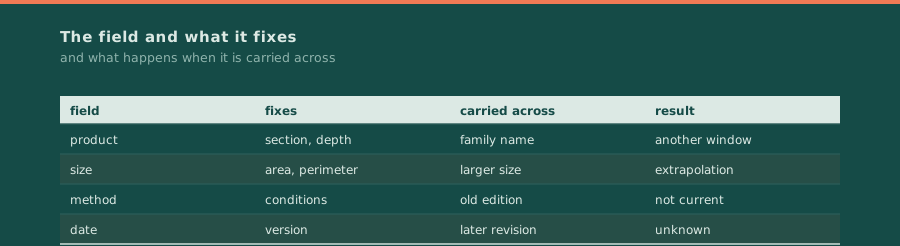
| Field | What it fixes | Carried across | Result |
|---|---|---|---|
| product | section, depth, hardware | family name only | different window |
| size | area and perimeter | a larger size | extrapolation |
| method | test conditions | a superseded edition | rating not current |
| date | the version tested | a later revision | unknown applicability |
A certificate is not the same as a specification. The certificate states what was tested; the specification states what has to be built. Where the two differ, the specification has to say what happens at the difference.
Where this sheet stops
This page covers the reading. The tests themselves are owned by the U-value, water penetration and air leakage sheets, and the assembly behind the certificate by the ten assembly pages.
Documents this sheet is drawn from
- 1NFRC 705-2024: Component Modeling Approach (CMA) Product Certification Programsupports the component modelling certification route a certificate may be issued under
- 2The Facts about the Component Modeling Approach (CMA) - NFRC Informational Packsupports the explanation of what that certification route does and does not cover
- 3NFRC 700-2024: Product Certification Programsupports the product certification programme the certificate is issued within
Each line points at one specific document, with its own title as the link text. No line is a home page and no line is a search result.
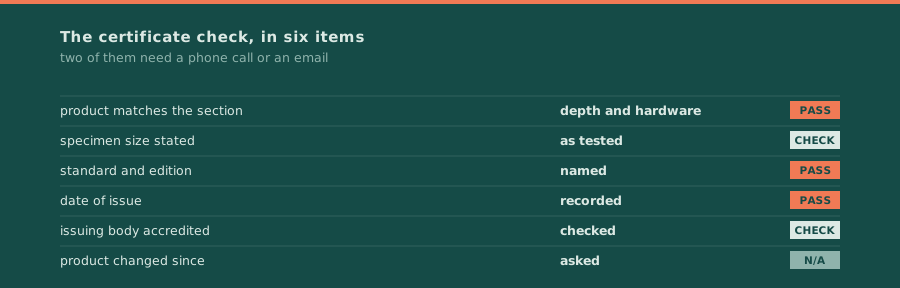
Sign the sheet and stop Sign the sheet and stop once all four fields match the drawing. A certificate with a mismatched field is evidence about a different window.