Weatherstrip is the compressible seal that closes the gap between an operable sash and its frame. Air leakage through an operable window is almost entirely leakage past this line, which is why the seal type and the hardware that compresses it decide the test result.
Weatherstrip: the line the leakage test actually measures
rev Cissue 04rev Crots yes — the figures above move with the standarddrawn by The Transom Set (a named set, not a person)
Three seal families
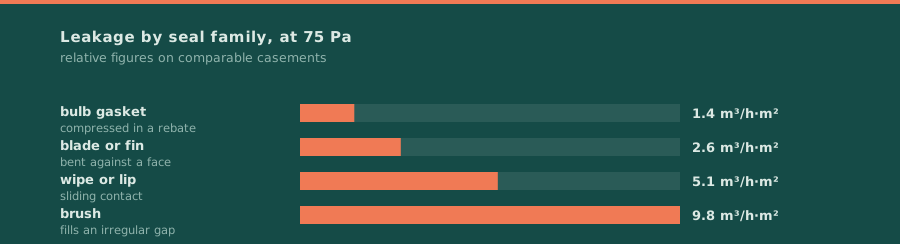
Compression seals work by being squashed: a bulb or a blade gasket sits in a rebate and the sash closing onto it does the sealing. Wipe seals slide against a surface and rely on contact along their length. Brush seals fill an irregular gap and are the weakest of the three, which is why they appear on sliding assemblies where nothing can be compressed.
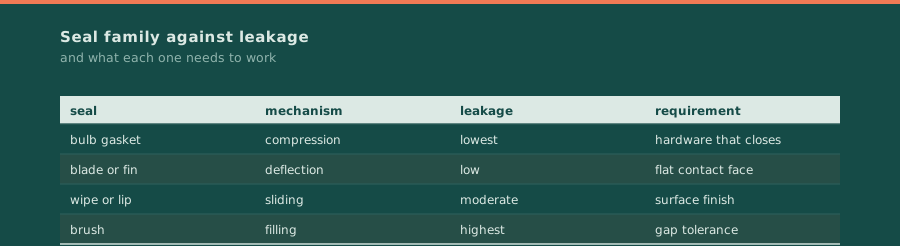
| Seal family | How it seals | Leakage | Where it is used |
|---|---|---|---|
| bulb gasket | compressed in a rebate | lowest | casement, tilt-turn |
| blade or fin | bent against a face | low | casement, sliding |
| wipe or lip | sliding contact | moderate | sliding, pivot |
| brush | fills an irregular gap | highest | sliding, sliding-folding |
The hardware is part of the seal
A compression gasket only compresses where the hardware pulls the sash in. A multipoint locking system that engages at six points compresses the seal at six places and leaves the rest relying on the gasket's own memory. This is why two windows with identical gaskets can carry different leakage figures: the difference is the locking, not the rubber.
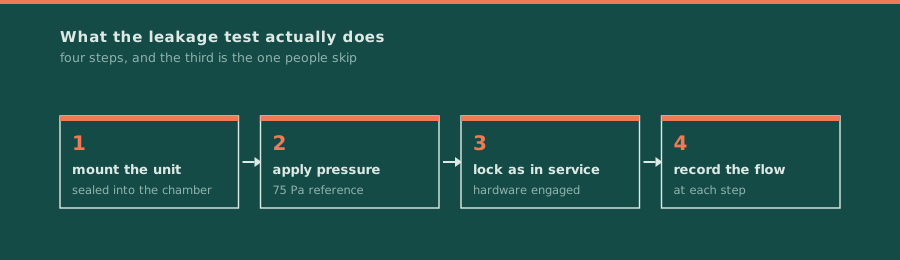
The measurement reflects that. Air leakage is tested with the sash closed and locked as it would be in service, so the number is a property of the whole operable unit and not of the seal alone. A gasket specification is not a leakage specification.
Weatherstrip is not the same as a glazing gasket. Weatherstrip seals a joint that opens and closes; a glazing gasket seals glass into a rebate that never moves. Using a glazing gasket as weatherstrip is a common and quiet mistake.
Where the definition stops
This page owns the operable joint. The fixed glazing joint is owned by the glazing gasket page, the continuity of the air barrier behind the frame by the airtightness line page, and the measurement itself by the air leakage test. Nothing here is repeated there.
Documents this sheet is drawn from
- 1ASTM E283/E283M-19 Standard Test Method for Determining Rate of Air Leakage Through Exterior Windows, Skylights, Curtain Walls, and Doorssupports the air leakage test method and the reference pressure used here
- 2Experimental and data-driven characterization of window-induced air leakage in residential buildings (ORNL)supports the measured relationship between window seals and whole-building leakage
- 3The Impact of Windows Replacement on Airtightness and Energy Performance (Energies, MDPI)supports the before-and-after leakage figures from a window replacement programme
Each line points at one specific document, with its own title as the link text. No line is a home page and no line is a search result.
Sign the sheet and stop Sign the sheet and stop once you know the seal family and the number of locking points. The leakage figure belongs to that pair.