A water penetration test puts a specimen in a chamber, applies a controlled spray outside it and a controlled pressure difference across it, and looks for water on the inside. Every variable is fixed by the method, and a test that changes one of them has tested something else.
How a water penetration test is run, and what voids it
rev Cissue 04rev Crots yes — the figures above move with the standarddrawn by The Transom Set (a named set, not a person)

The method, step by step
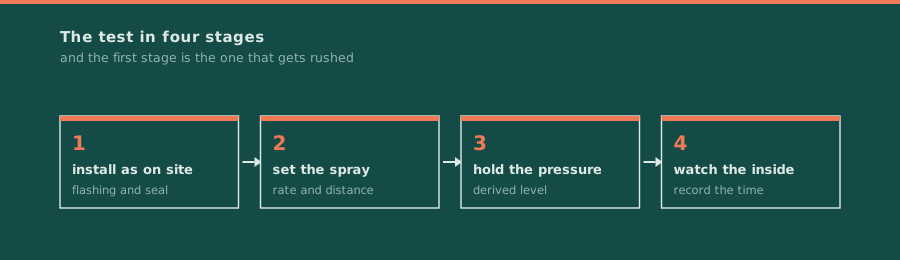
The specimen is installed in the chamber exactly as it would be on site, including the flashing and the perimeter seal, because the perimeter is where most leakage appears. The spray rack is set at the method's rate and distance. The pressure is raised to the test level and held. The inside face is watched, and any water that appears is recorded with the time it appeared.
- Install the specimen as it would be installed, including flashing and perimeter seal.
- Set the spray rack to the rate and distance the method specifies, and verify the calibration.
- Raise the pressure to the derived test level and hold it for the specified duration.
- Record the pressure, the duration, the time any water appeared and the path it took.
What voids a test
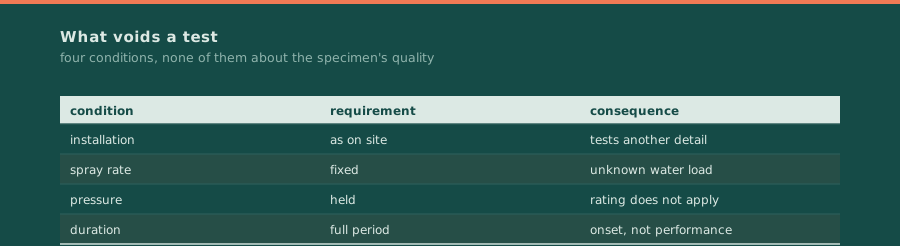
Four things, and none of them is about the specimen. A specimen that was installed differently from the site detail has been tested as something else. A spray rack out of calibration has applied an unknown amount of water. A pressure that drifted during the hold has not been held at the test level. And a test that was stopped as soon as water appeared has measured the onset rather than the performance.
| Condition | Required | If it changes |
|---|---|---|
| specimen installation | as on site | the test describes a different detail |
| spray rate | fixed by the method | an unknown quantity of water |
| test pressure | derived, then held | the rating does not apply |
| duration | full hold period | onset recorded, not performance |
A laboratory test on a new specimen is not the same as a field test on an installed window. The field method uses a lower pressure and a portable spray rack, and it tests the installation as much as the product. Both are useful and neither replaces the other.
Where this sheet stops
This page covers the method and its voids. The path the water takes is owned by the drainage page, the rating that comes out of the test by the revision on pressure ratings, and the field version by the failure record.
Documents this sheet is drawn from
- 1ASTM E331 Standard Test Method for Water Penetration of Exterior Windows, Skylights, Doors, and Curtain Walls by Uniform Static Air Pressure Differencesupports the laboratory water penetration test method and its pressure derivation
- 2ASTM E1105-15 Standard Test Method for Field Determination of Water Penetration of Installed Exterior Windows, Skylights, Doors, and Curtain Wallssupports the field water penetration test method used on installed windows
- 3Understanding ASTM E1105 (Hightower Labs Library)supports the practical reading of a field water test and its limitations
Each line points at one specific document, with its own title as the link text. No line is a home page and no line is a search result.
Sign the sheet and stop Sign the sheet and stop once you have the pressure, the duration and the time water appeared. Those three are the result.