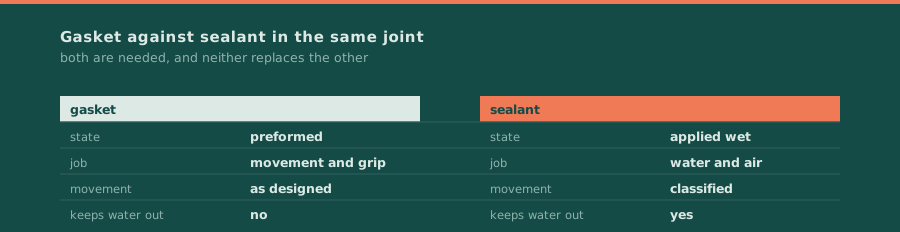
A glazing gasket is a preformed rubber profile that holds glass in a rebate and absorbs movement. A sealant is a liquid-applied material that cures in place and keeps water out. They are not substitutes, and most wet glazing details need both.
Glazing gasket and sealant: two jobs, two materials
rev Cissue 04rev Crots yes — the figures above move with the standarddrawn by The Transom Set (a named set, not a person)
The gasket's three jobs
It centres the glass in the rebate so the edge clearance is even. It isolates the glass from the metal, which matters because glass and aluminium move differently and a hard contact is a crack waiting for a cold night. And it takes the movement of the pane in service. All three are mechanical; keeping water out is a fourth job that a dry-glazed system does with drainage rather than with the gasket.
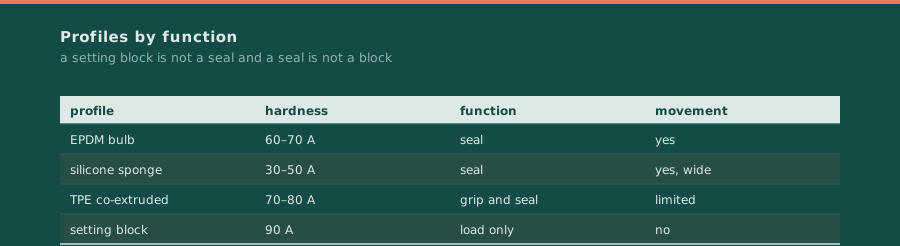
| Profile | Hardness | Job | Trap |
|---|---|---|---|
| EPDM bulb | 60–70 Shore A | compression seal, movement | perishes in ozone if unformulated |
| silicone sponge | 30–50 Shore A | movement, wide tolerance | low tear strength |
| TPE co-extruded | 70–80 Shore A | structural grip with a soft lip | hardness varies along the length |
| setting block | 90 Shore A | carries the glass weight | not a seal at all |
The sealant's job is different
A structural or weather sealant has to bond to two dissimilar surfaces and stretch without tearing. That is why sealants are classified by movement capability rather than by strength, and why a sealant with a 25 % movement class cannot be used in a joint that will move 40 %. The classification is in the standard, and the joint design has to be done before the sealant is chosen.
The most common failure is not the wrong sealant. It is a joint that was never sized, filled with whatever was on the van, and then asked to take a movement nobody calculated. When it tears, the gasket is blamed, because the gasket is what you can see.
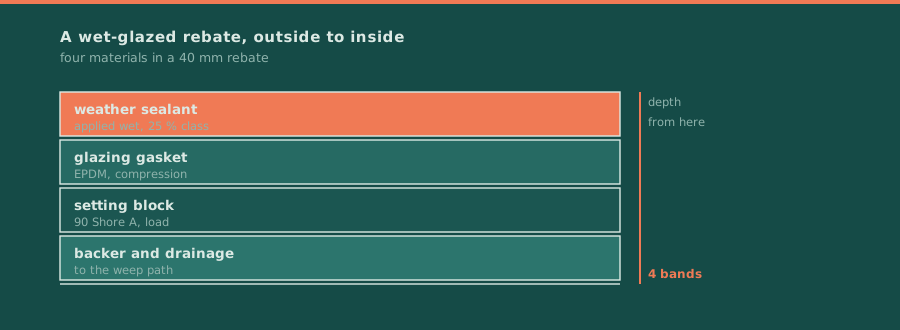
A gasket is not the same as a sealant, and a setting block is not the same as either. Three materials, three jobs: a block carries load, a gasket takes movement, a sealant stops water. A detail that uses one of them for all three is the detail that leaks.
Where the definition stops
This page owns the glazed joint. The operable joint is owned by the weatherstrip page, the drainage behind the joint by the drainage path page, and the sealant standard's test method by the water penetration test. Nothing here is repeated there.
Documents this sheet is drawn from
- 1Guide to designing and installing commercial IGU glazing - glazing materials, structural gaskets, boot glazingsupports the glazing materials, structural gasket and boot glazing detail described here
- 2Guide to designing and installing commercial IGU glazingsupports the installation sequence for commercial glazing that the gasket table follows
- 3ASTM C920 Standard Specification for Elastomeric Joint Sealants (ASTM Store)supports the sealant classification by type, grade and movement class
Each line points at one specific document, with its own title as the link text. No line is a home page and no line is a search result.
Sign the sheet and stop Sign the sheet and stop once you know which of the three materials is doing which job in the detail. That is the whole question.