A warm-edge spacer was fitted to a block of units, and the condensation on the glass edge stopped. It reappeared on the frame face, in the same rooms, on the same mornings. The window improved and the complaint did not go away.
Condensation on the frame rather than on the glass
rev Bwritten 2026-08-18issue 04rev Bdrawn by The Transom Set (a named set, not a person)
What happened
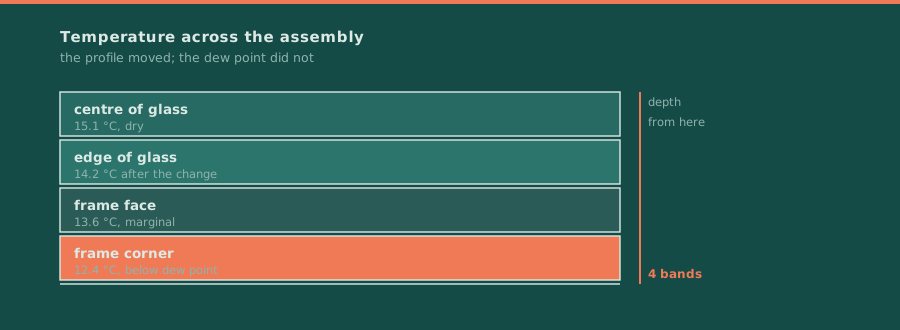
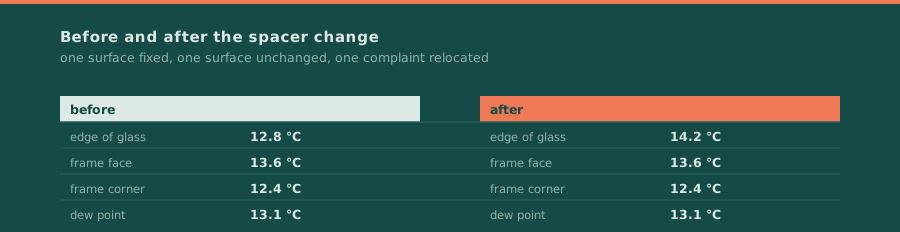
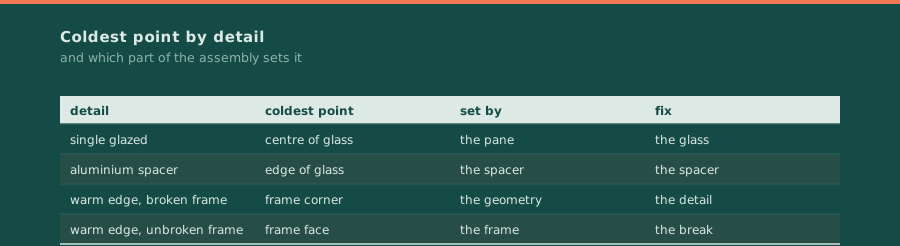
The spacer change lifted the glass edge above the dew point, which is what it is for. It did nothing to the frame, because the frame's temperature is set by the break and the section, not by the spacer. The coldest surface in the assembly therefore moved outward, from the glass edge onto the frame face, and the dew point had not moved at all.
| Surface | Before | After | Dew point |
|---|---|---|---|
| centre of glass | 15.1 °C | 15.1 °C | 13.1 °C |
| edge of glass | 12.8 °C | 14.2 °C | 13.1 °C |
| frame face | 13.6 °C | 13.6 °C | 13.1 °C |
| frame corner | 12.4 °C | 12.4 °C | 13.1 °C |
Why the corner was already wet
The frame corner was below the dew point before the change and remained below it after. It was not the surface being complained about, because the complaint had been about the glass and the corner was small. Once the glass stopped running, the corner was the only surface still running, and it became the whole complaint.
This is the general shape of edge improvements in cold climates. Improving one part of a detail raises the temperature of that part and leaves the rest where it was, so the failure relocates. A detail is only improved when the coldest point in it is above the dew point, and the coldest point is usually a corner.
This is not an argument against warm-edge spacers. It is an argument against improving one component of a detail and declaring the detail solved. The spacer did what it claims; the frame was never in the scope of the claim.
What this changes
It changes the order of work. In a cold climate the frame break should be addressed before or with the spacer, not after, because the frame corner is the coldest point in most residential details and it is the point that will still be wet when everything else is dry. It also changes what an inspection should record: not the surface the occupant reports, but the coldest surface found, which is a different place.
Documents this sheet is drawn from
- 1AAMA 1503.1-1988: Voluntary Test Method for Thermal Transmittance and Condensation Resistance of Windows, Doors and Glazed Wall Sectionssupports the thermal transmittance and condensation resistance test method behind the readings
- 2Condensation Resistance Factor Tool Guide (FGIA)supports the condensation resistance factor tool used to compare the surfaces
- 3Guide to Energy-Efficient Windows (U.S. DOE)supports the practical guidance on window selection that the order of work follows
Each line points at one specific document, with its own title as the link text. No line is a home page and no line is a search result.
Sign the sheet and stop Sign the sheet and stop once you know the coldest surface, not the wet one. They are usually different places.