A spacer bar is the frame inside an insulating glass unit that holds the panes apart, carries the desiccant and receives both seals. What it is made of decides how much heat crosses the edge of the unit, and the edge is a small area with a large effect.
Warm edge spacer bar against aluminium: the edge is where it fails
rev Cissue 04rev Crots yes — the figures above move with the standarddrawn by The Transom Set (a named set, not a person)
What the spacer has to do
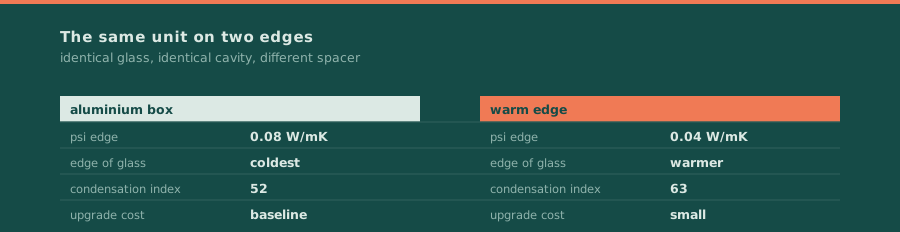
Three jobs at once. It holds the panes at a fixed distance, it holds desiccant in contact with the cavity so the gas stays dry, and it takes the primary seal on its outer face and the secondary seal around its inner. Aluminium does all three cheaply and conducts heat straight across the edge. A warm-edge spacer does the same three jobs with a material that conducts far less.
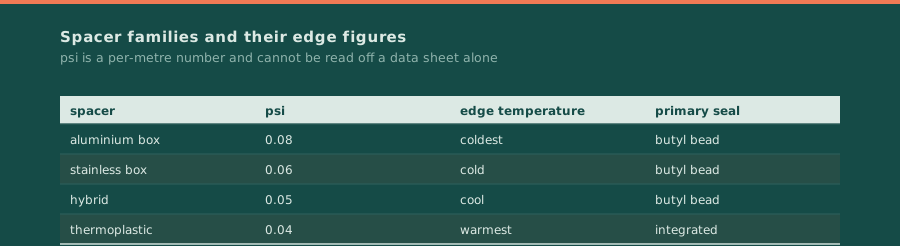
| Spacer | psi (typical) | Edge of glass | Note |
|---|---|---|---|
| aluminium box | 0.08 W/mK | coldest | still common in commercial work |
| stainless steel box | 0.06 W/mK | cold | thinner walls, same idea |
| hybrid, metal + polymer | 0.05 W/mK | cool | the common upgrade |
| thermoplastic warm edge | 0.04 W/mK | warmest | no separate primary bead |
Why the edge matters more than its area suggests
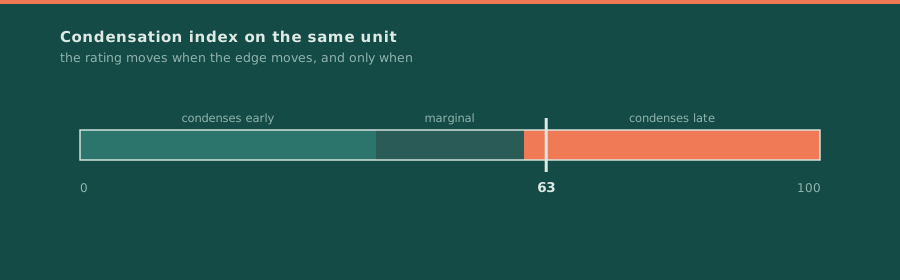
The edge is a strip a few centimetres wide. Its share of the unit area is small, so its share of the U-value looks small. But condensation is decided by the coldest surface, not by the average, and the coldest surface on a well-made unit is the edge of glass on a cold day. Moving that edge by a few degrees is the difference between a dry window and one that runs.
That is the whole argument, and it is worth stating plainly: a warm-edge spacer that moves the condensation index by ten points has not solved anything. It has moved the problem to a colder corner of the same frame, and the corner is where the occupant will see it. The next sheet in the sequence is about that corner.
A warm-edge spacer is not the same as a thermally broken frame. The spacer is inside the sealed unit; the break is in the metal frame around it. Either one can be present without the other, and each moves a different part of the temperature profile.
Where the definition stops
This page owns the edge seal. The cavity it closes is owned by the unit page, the break in the frame by the thermal break page, and the rating that measures the coldest surface by the condensation test. Nothing here is repeated there.
Documents this sheet is drawn from
- 1Condensation: Why fenestration component selection matters (frame / thermal barrier / spacer comparison)supports the frame, thermal barrier and spacer comparison that the edge table follows
- 2Performance Assessment of the Overall Building Envelope Thermal Performance - BEP Metric (ORNL)supports the envelope-level thermal assessment the edge contribution is judged within
- 3Sustainable Glass Facades: Understanding the Long-Term Thermal Performance of IGUs (GPD 2025)supports the long-term thermal performance figures for the edge over service life
Each line points at one specific document, with its own title as the link text. No line is a home page and no line is a search result.
Sign the sheet and stop Sign the sheet and stop once you know which spacer the unit carries. The edge figure belongs to the spacer, not to the glass.