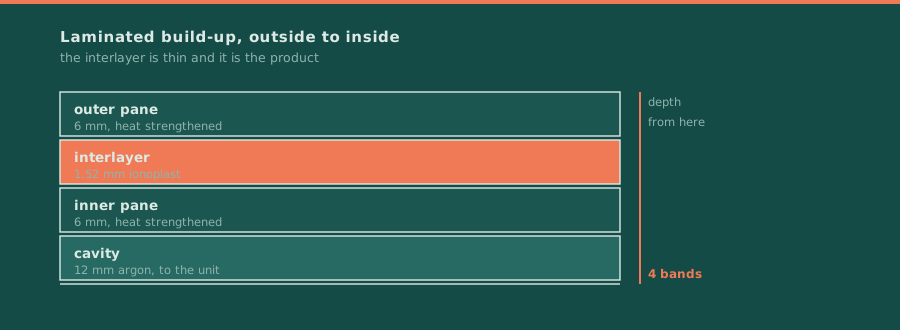
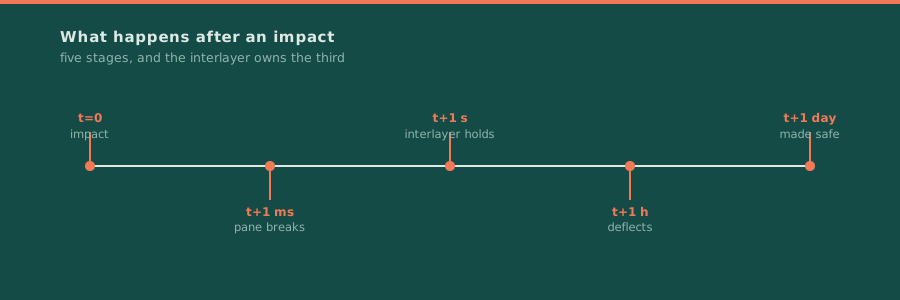
Laminated glass is two or more panes bonded together by a polymer interlayer, so that the assembly stays in its opening after the glass breaks. The interlayer is the product; the glass either side of it is chosen for other reasons.
Laminated glass: the interlayer decides what happens after the break
rev Cissue 04rev Crots yes — the figures above move with the standarddrawn by The Transom Set (a named set, not a person)
Three interlayers, three behaviours
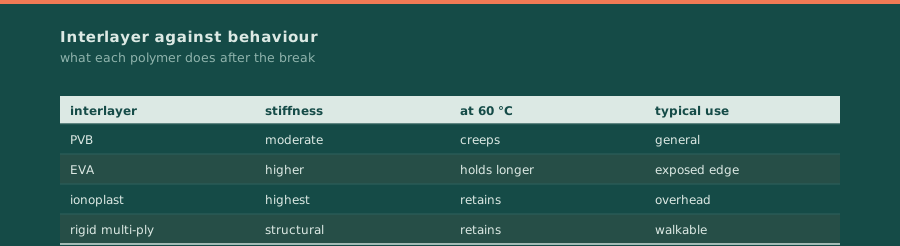
PVB is the default for architectural laminated glass, cheap and clear and stiff enough for most work. EVA is stiffer, tolerates moisture better and is used where the edge will be exposed. Ionoplast is an order of magnitude stiffer and is the only one that keeps meaningful post-break strength at elevated temperature, which is why it appears in overhead and balustrade work.
| Interlayer | Post-break stiffness | At temperature | Used for |
|---|---|---|---|
| PVB | moderate | softens above 30 °C | general glazing |
| EVA | higher | better retention | exposed edges, wet areas |
| ionoplast | highest | retains stiffness | overhead, balustrades |
| rigid, multi-ply | structural | retains | walkable, structural |
Heat treatment is a separate decision
Heat-strengthened and fully tempered glass are not the same product, and the difference matters for what happens when the glass breaks. Tempered glass breaks into small dice; heat-strengthened glass breaks into larger pieces that stay in the frame, which is why heat-strengthened is often paired with a laminate in overhead work and tempered is used where the break pattern itself is the safety feature.
The trap is that heat treatment leaves the surface in a different state from the float glass it started as, and the two are visually and optically different in ways that a specification sometimes does not mention. A facade built from tempered and heat-strengthened panes of the same nominal glass can show a visible difference in reflection, and the difference is in the process rather than in the material.
Laminated glass is not the same as safety glass, although laminated glass can be safety glass. Safety is a performance classification under a standard; lamination is a construction. A laminated pane that has never been classified is laminated and not certified, and the two are not interchangeable in a specification.
Where the definition stops
This page owns the laminate. The heat treatment of the panes inside it is owned here and nowhere else, the unit it forms part of by the unit page, and the certificate that classifies it by the certificate check. Nothing here is repeated there.
Documents this sheet is drawn from
- 1GANA Laminated Glazing Reference Manualsupports the laminated glazing construction and interlayer reference the table follows
- 2GANA Technical Service Bulletin FG02-01/16: Heat-Treated Glass Surfaces are Differentsupports the difference between heat-treated glass surfaces and their behaviour
- 3GANA TD-02-0402: Heat-Treated Glass Surfaces Are Different (Glass Technical Paper)supports the production guidance behind the heat-treatment trap described here
Each line points at one specific document, with its own title as the link text. No line is a home page and no line is a search result.
Sign the sheet and stop Sign the sheet and stop once you know the interlayer and the heat treatment. Those two decide the break behaviour, and nothing else does.