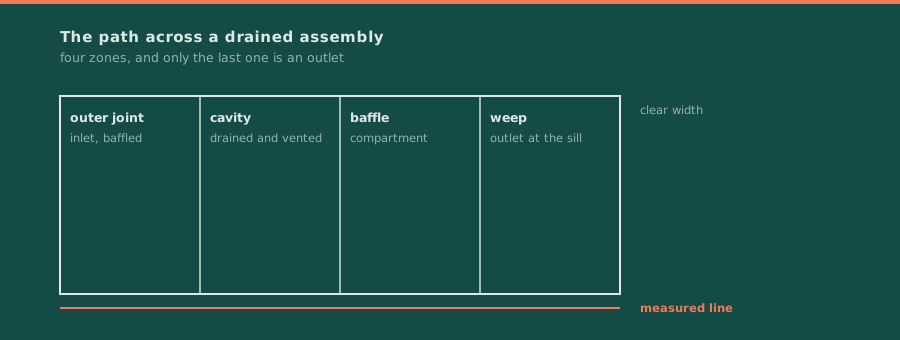
A drained window or rainscreen wall is designed on the assumption that some water will get past the outer line. The assembly then has to collect that water and get it out again, and the path that does it has three parts: an inlet, a cavity and an outlet.
Drainage path: the cavity, the baffle and the weep
rev Cissue 04rev Crots yes — the figures above move with the standarddrawn by The Transom Set (a named set, not a person)
The three parts
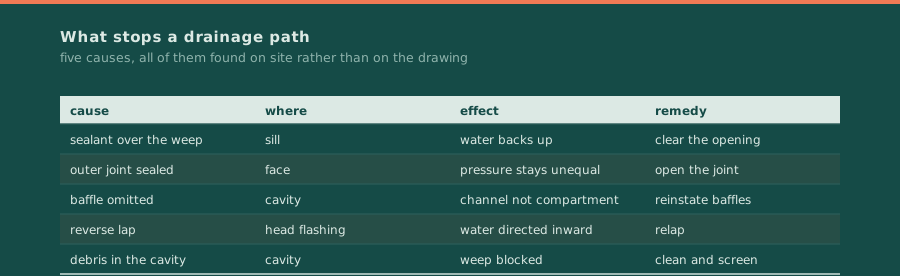
The inlet is the open joint at the outer face, which is deliberately not sealed. The cavity is the drained and ventilated space behind it, divided by baffles so that one compartment does not become a channel. The outlet is the weep at the bottom of each compartment, which has to be open, protected against wind-driven rain and clear of the sealant that will otherwise be applied over it.
| Part | Job | Typical provision | What stops it working |
|---|---|---|---|
| inlet joint | admit air, limit rain | open joint, baffled | sealing the outer joint |
| cavity | collect and equalise | 25 mm minimum depth | baffles left out |
| weep | let water out | one per compartment | sealant across the opening |
| flashing | shed at the head | continuous, lapped | reverse lap |
Pressure equalisation is the mechanism
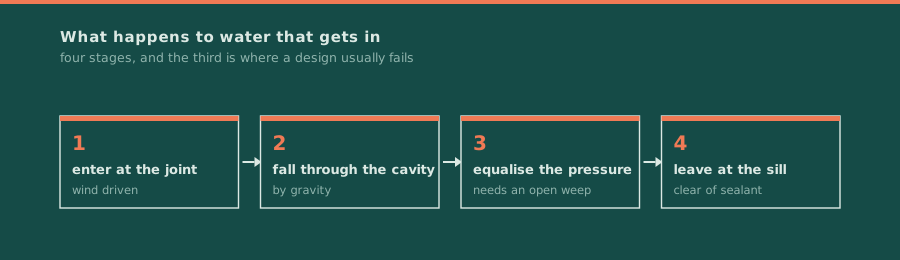
Water is driven through an opening by a pressure difference, not by gravity alone. If the cavity behind the outer joint is held at the same pressure as the outside face, there is no difference across the joint and no driving force — the water falls rather than being pushed. That is the whole theory of a pressure-equalised rainscreen, and it explains why an over-sealed outer joint is worse than an open one.
In practice equalisation is partial and intermittent. Wind gusts faster than a small cavity can equalise, so the design still needs the cavity to drain and the inner line to be the water line. Equalisation reduces the load on the inner line; it does not remove it.
A weep is not the same as a drainage hole in the frame. A weep is the deliberate outlet of a compartment with an inlet; a hole drilled after the fact drains whatever happens to collect behind it, which may be a compartment with no inlet, and it may be in the wrong place.
Where the definition stops
This page owns the drainage path. The joint at the outer face is owned by the glazing gasket page, the operable joint by the weatherstrip page, and the field test that proves the path works by the water penetration test. Nothing here is repeated there.
Documents this sheet is drawn from
- 1Pressure Equalization in Rainscreen Wall Systems (AIVC Construction Technology Update No. 17)supports the pressure equalisation mechanism and the inlet-to-outlet area argument
- 2RAiNA Literature Review Report - rainscreen and pressure-equalized wall designsupports the rainscreen and pressure-equalised design literature the table follows
- 3Pressure Equalized or Drained and Back Ventilated Rainscreen Systems (Metal Construction News Technical Bulletin)supports the distinction between a pressure-equalised and a drained and back-ventilated system
Each line points at one specific document, with its own title as the link text. No line is a home page and no line is a search result.
Sign the sheet and stop Sign the sheet and stop once you know where the inlet is and where the outlet is. A path with only one end is not a path.